Introduction
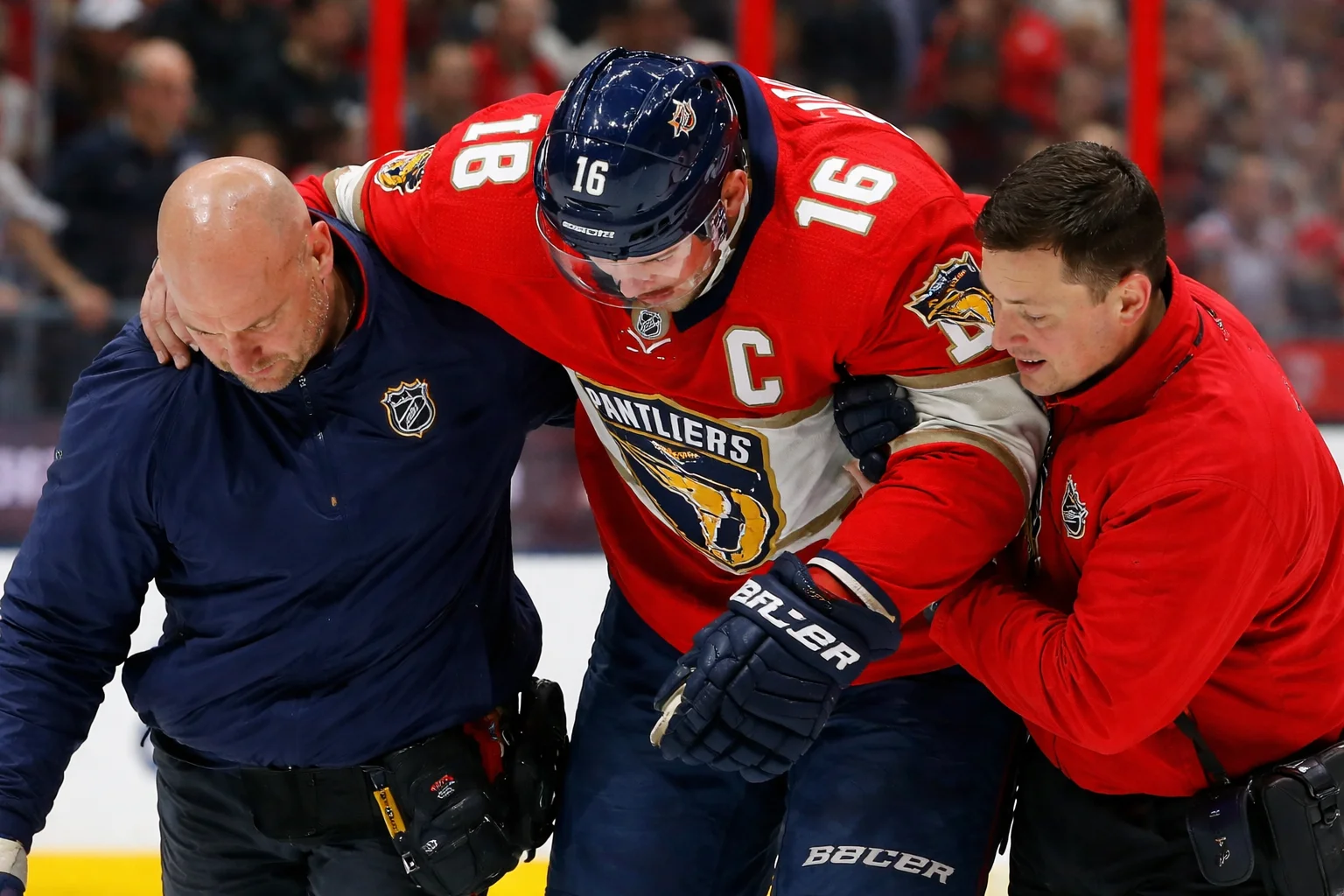
The barkov injury has become one of the most closely watched situations in the NHL. As the captain and top two-way center of the Florida Panthers, Aleksander Barkov plays a central role in every part of the team’s game. When he leaves a match injured, it immediately raises questions about his availability, the team’s short-term plans, and how Florida will adjust without him.
This article delivers a complete, clear, and accurate breakdown of Barkov’s injury situation, focusing on what happened, his current status, expected recovery outlook, and how the Panthers are affected on the ice.
What Happened to Barkov
Barkov’s injury occurred during game action, where he was involved in a physical sequence that forced him to leave play early. He did not return for the remainder of the game, which quickly triggered concern among teammates, coaches, and fans.
The timing of the injury was important. It came during a competitive stretch of the season, when line stability and leadership are critical. Barkov’s absence was immediately noticeable, especially in defensive zone coverage and faceoff situations where he normally excels.
See also NHL Trade Deadline: Complete Guide, Rules, Impact, and Strategy
Initial Team Response
Following the game, the Florida Panthers confirmed that Barkov was being evaluated. The team did not rush to provide a detailed diagnosis, which is common in these situations. Early updates focused on monitoring symptoms and assessing how Barkov responded after the game and during off-ice evaluations.
The coaching staff emphasized caution rather than urgency. Protecting a player of Barkov’s importance remains a priority, particularly when long-term health and leadership responsibilities are involved.
Current Injury Status
As of the latest update, Barkov’s status has been listed as day-to-day, with ongoing evaluations guiding the final decision on his return. He has not been ruled out for upcoming games, but he has also not been fully cleared to resume game action.
Practice participation has become the key indicator. Limited or non-contact sessions suggest the team is allowing extra recovery time, while full participation would indicate a possible return in the near future.
Type of Injury and Severity
The Panthers have not released a detailed medical label, but all signs point toward a lower-body issue. There has been no indication of a major structural injury, which is encouraging.
Lower-body injuries can vary widely in recovery time, depending on pain response, mobility, and stability. In Barkov’s case, the cautious approach suggests the team is confident the injury is manageable but wants to avoid aggravation.
Expected Return Timeline
Based on team updates and on-ice activity, Barkov’s return window can be viewed in three realistic scenarios:
Best-case scenario
- Barkov returns within one to two games
- Full practice participation resumes quickly
- No lingering discomfort reported
Most likely scenario
- He misses a short stretch of games
- Gradual increase in ice time after return
- Load management used during early games back
Worst-case scenario
- Recovery takes longer than expected
- Panthers hold him out as a precaution
- Return delayed to ensure full strength and mobility
At this stage, there is no indication that the injury will keep him sidelined for an extended period.
Impact on the Florida Panthers
Barkov’s absence affects the Panthers in several key areas:
Leadership: As captain, Barkov sets the tone on and off the ice. His calm presence and decision-making are difficult to replace, especially in close games.
Defensive Structure: Barkov is one of the league’s strongest defensive forwards. Without him, Florida must adjust its neutral-zone coverage and penalty-killing strategies.
Offensive Balance: He anchors the top line and draws tough defensive matchups. Without him, opposing teams can focus more heavily on Florida’s remaining scoring threats.
Lineup Adjustments Without Barkov
In Barkov’s absence, the Panthers have turned to internal solutions. Centers lower in the lineup have taken on increased responsibilities, including more defensive zone starts and faceoff duties.
Wingers have also been asked to support defensively, helping compensate for the loss of Barkov’s two-way reliability. While these adjustments can work in the short term, they are not ideal over a long stretch.
Power Play and Special Teams Effect
Barkov plays a key role on the power play, particularly in puck distribution and net-front movement. Without him:
- Power-play entries become less controlled
- Passing lanes tighten
- Shot selection becomes more predictable
On the penalty kill, his absence reduces Florida’s ability to clear the puck efficiently and win critical faceoffs.
Barkov’s Importance to the Team
Barkov is not just another top-six forward. He is the foundation of Florida’s system. His ability to contribute offensively while shutting down elite opponents makes him one of the most valuable centers in the league.
He consistently logs heavy minutes against top competition, takes key defensive assignments, and still produces at a high offensive level. Few players combine these responsibilities as effectively.
Recent Performance Before the Injury
Before getting injured, Barkov was performing at a high level:
- Strong faceoff win percentage
- Consistent point production
- Heavy ice time in all situations
His form made the injury particularly frustrating, as he was playing some of his most complete hockey of the season.
Injury History and Durability
Barkov has dealt with injuries in previous seasons, but he is generally known for returning strong and maintaining a high level of play. He does not rush back prematurely, and the team has historically prioritized full recovery over quick returns.
This pattern suggests that when Barkov does return, he is likely to be close to full effectiveness rather than limited by lingering issues.
How the Panthers Are Managing the Situation
Florida’s medical and coaching staff are focused on:
- Daily evaluations
- Monitoring practice workload
- Avoiding unnecessary risk
This approach reflects Barkov’s importance not only for the immediate schedule but for the team’s overall success.
What to Watch Going Forward
Fans and analysts should pay attention to:
- Practice participation updates
- Line combinations during warm-ups
- Pre-game status reports
These signals often provide the clearest indication of when Barkov is ready to return.
Fan and League Reaction
Across the league, Barkov’s injury has drawn attention due to his reputation as one of the NHL’s most complete centers. Opposing teams recognize the advantage created when he is out of the lineup, while Panthers supporters remain cautiously optimistic about his recovery.
Conclusion
The barkov injury is a significant storyline, but current information suggests a manageable situation rather than a serious long-term concern. Florida is taking a careful approach, prioritizing Barkov’s health and effectiveness over rushing him back into action.
His return will immediately stabilize the Panthers’ lineup, restore balance across all situations, and reinforce the leadership core of the team. Until then, Florida will rely on depth, structure, and discipline to navigate games without their captain.
Frequently Asked Questions
Is Barkov expected to miss many games?
At this time, he is considered day-to-day. A short absence is more likely than an extended one.
Has the team confirmed the exact injury?
No detailed diagnosis has been released, but updates point toward a lower-body issue.
Will Barkov return at full strength?
Based on past recoveries and the team’s cautious approach, he is expected to return close to full form.
How important is Barkov to Florida’s success?
He is one of the most important players on the roster, impacting offense, defense, leadership, and special teams.