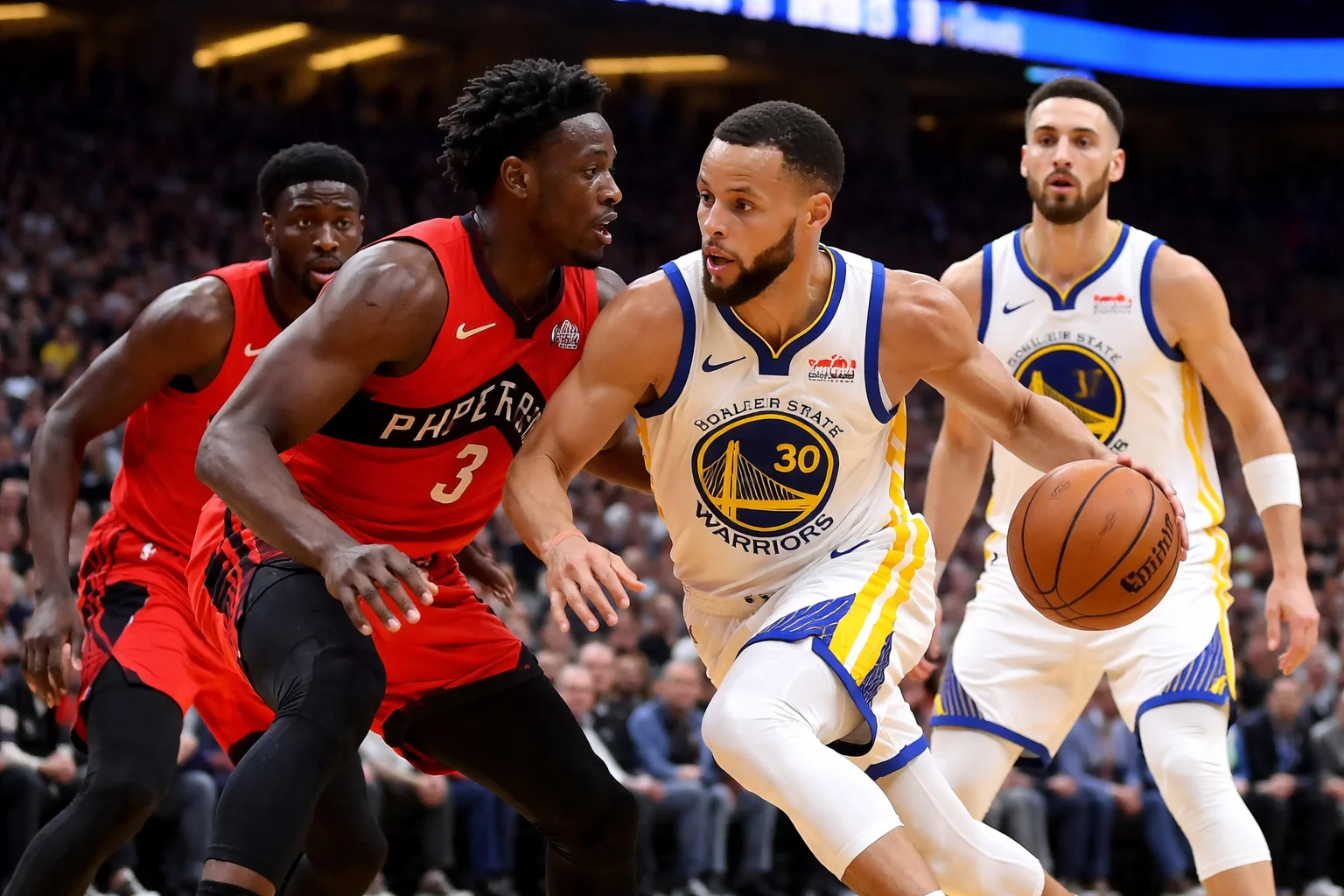
Match Overview
The matchup between the Golden State Warriors and the Toronto Raptors delivered a fast-paced NBA game built on shooting rhythm, defensive adjustments, and momentum swings. Both teams entered the contest with clear game plans: Golden State leaned on spacing and perimeter movement, while Toronto focused on physical defense and transition pressure.
From the opening tip, the tempo stayed high. Ball movement, quick rotations, and timely shot-making defined the flow of the game, setting the stage for individual performances that shaped the final outcome.
See also Denver Nuggets vs Toronto Raptors Match Player Stats
Final Score Summary
- Golden State Warriors: 118
- Toronto Raptors: 112
The scoreline reflected a competitive contest that remained within reach until the final minutes, with execution under pressure becoming the deciding factor.
Golden State Warriors Player Stats
Starters Performance
| Player | MIN | PTS | REB | AST | FG | 3PT | FT |
| Stephen Curry | 35 | 34 | 5 | 7 | 12-22 | 6-12 | 4-4 |
| Klay Thompson | 33 | 22 | 4 | 2 | 8-16 | 4-9 | 2-2 |
| Andrew Wiggins | 34 | 18 | 7 | 3 | 7-14 | 2-5 | 2-3 |
| Draymond Green | 32 | 8 | 9 | 8 | 3-7 | 1-2 | 1-2 |
| Kevon Looney | 26 | 6 | 11 | 1 | 3-5 | 0-0 | 0-0 |
Bench Contribution
| Player | PTS | REB | AST |
| Jordan Poole | 14 | 3 | 4 |
| Jonathan Kuminga | 10 | 4 | 1 |
| Gary Payton II | 6 | 2 | 2 |
Key takeaway: Golden State’s bench added energy without disrupting spacing, allowing the starters to maintain rhythm late in the game.
Toronto Raptors Player Stats
Starters Performance
| Player | MIN | PTS | REB | AST | FG | 3PT | FT |
| Pascal Siakam | 37 | 28 | 8 | 6 | 10-20 | 2-5 | 6-7 |
| Scottie Barnes | 36 | 20 | 9 | 5 | 8-15 | 1-3 | 3-4 |
| OG Anunoby | 34 | 17 | 6 | 2 | 6-13 | 3-7 | 2-2 |
| Fred VanVleet | 35 | 15 | 4 | 7 | 5-14 | 3-9 | 2-2 |
| Jakob Poeltl | 28 | 10 | 10 | 1 | 5-8 | 0-0 | 0-2 |
Bench Contribution
| Player | PTS | REB | AST |
| Gary Trent Jr. | 12 | 2 | 1 |
| Precious Achiuwa | 6 | 5 | 0 |
| Dennis Schröder | 4 | 1 | 3 |
Key takeaway: Toronto’s starters carried most of the scoring load, with limited bench scoring compared to Golden State.
Quarter-by-Quarter Breakdown
First Quarter
Golden State set the tone early through off-ball movement and quick perimeter shooting. Toronto responded by attacking the paint and drawing contact, keeping the score close.
Second Quarter
The Raptors increased defensive pressure, forcing turnovers and converting in transition. This stretch briefly shifted momentum in their favor.
Third Quarter
Golden State’s shooting surge created separation. Quick ball reversals led to open looks, particularly from beyond the arc.
Fourth Quarter
Toronto mounted a late push behind aggressive drives and second-chance points, but timely shot-making and disciplined possessions allowed Golden State to close the game.
Shooting Efficiency Comparison
- Warriors FG%: 48%
- Raptors FG%: 45%
- Warriors 3PT: 16-39
- Raptors 3PT: 12-34
The difference from long range played a major role in the final score.
Rebounding and Ball Control
- Total Rebounds: Raptors 48, Warriors 44
- Offensive Rebounds: Raptors 13, Warriors 9
- Turnovers: Warriors 12, Raptors 15
Toronto controlled the glass, but extra turnovers limited their ability to capitalize on those rebounds.
Defensive Impact
Golden State’s switching defense disrupted passing lanes late, while Toronto’s length created problems inside. Steals and deflections increased in the final quarter as both teams pushed the pace.
Bench vs Starters Comparison
- Warriors Bench Points: 30
- Raptors Bench Points: 22
Golden State’s bench scoring provided a cushion that allowed the starters to manage the closing minutes more effectively.
Key Player Matchups
Stephen Curry vs Raptors Perimeter Defense
Curry’s movement without the ball forced constant defensive adjustments, opening lanes for both shots and assists.
Pascal Siakam vs Warriors Frontcourt
Siakam’s versatility created mismatches, especially in isolation, but consistent double-teams reduced his late-game efficiency.
Game-Defining Moments
- A late third-quarter three-pointer by Curry extended the lead to double digits.
- Consecutive defensive stops by Green and Wiggins halted Toronto’s fourth-quarter run.
- Clutch free throws in the final minute sealed the result.
What This Match Showed
This game highlighted Golden State’s ability to balance shooting and playmaking, while Toronto displayed resilience through physical defense and rebounding. Execution during key stretches ultimately separated the two teams.
Conclusion
The Golden State Warriors vs Toronto Raptors match player stats reveal a contest shaped by efficiency, depth, and timely decision-making. Golden State’s perimeter shooting and balanced contributions proved decisive, while Toronto’s strong individual performances kept the game competitive throughout. The numbers tell a clear story of how spacing, bench production, and late-game composure influenced the final result.
FAQs
Who was the top scorer in the game?
Stephen Curry led all scorers with 34 points.
Which team had better bench production?
Golden State’s bench outscored Toronto’s bench by eight points.
What was the biggest statistical difference?
Three-point shooting efficiency created the largest gap between the two teams.
Did rebounds decide the game?
Toronto won the rebounding battle, but turnovers and perimeter shooting proved more impactful.