
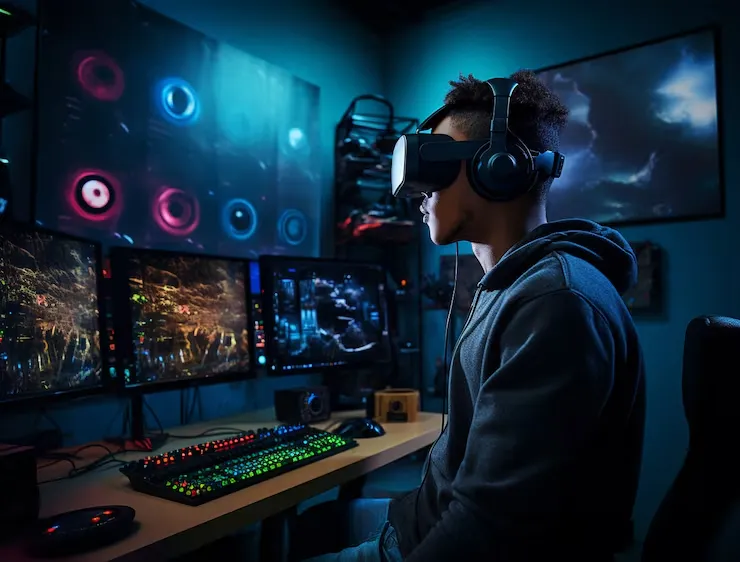
Gaming has evolved far beyond simply playing a video game for entertainment. Today, competitive gaming has become a global industry supported by advanced hardware, faster internet connections, sophisticated software, streaming platforms, and constantly improving gaming technologies. Esports players now rely on technology for almost every part of their competitive experience, from practice and communication to performance analysis and live competition.
The development of modern gaming consoles, accessories, applications, and online services has also made gaming more accessible to different types of players. Whether someone enjoys casual console gaming or follows professional esports tournaments, technology continues to influence how games are played, watched, and experienced.
As this industry continues to grow, understanding the role of technology can help players and enthusiasts make better decisions when choosing gaming equipment and digital resources.
The Evolution of Modern Gaming
The gaming industry has experienced significant changes over the past several decades. Early video games were relatively simple and were often designed around basic gameplay mechanics. Players mainly focused on completing levels or achieving high scores.
Modern games are considerably more advanced. Developers can create detailed environments, realistic characters, complex multiplayer systems, and constantly changing online experiences. These improvements have been made possible through developments in processors, graphics technology, cloud infrastructure, storage, and internet connectivity.
Gaming consoles have also become powerful entertainment systems rather than devices used exclusively for playing games. Many modern consoles support online multiplayer, digital stores, streaming services, voice communication, and other applications.
This technological progress has created new opportunities for both casual gamers and competitive esports players.
Why Hardware Matters in Competitive Gaming
Hardware plays an important role in gaming performance. A player’s skills are essential, but reliable equipment can help provide a consistent experience.
Several hardware components can influence gameplay, including:
- Gaming consoles
- PCs and graphics cards
- Gaming monitors
- Controllers
- Keyboards and mice
- Gaming headsets
- High-speed storage
- Network equipment
For competitive players, responsiveness can be particularly important. A small delay between an input and the action appearing on screen can affect gameplay in fast-paced titles.
Modern gaming equipment therefore focuses heavily on reducing latency and improving responsiveness. Displays with high refresh rates, responsive controllers, and optimized networking can contribute to a smoother competitive experience.
The Growing Importance of Gaming Consoles
Gaming consoles remain an important part of the industry despite the rapid growth of PC and mobile gaming. They provide players with dedicated hardware designed specifically for interactive entertainment.
One major advantage of consoles is their relatively straightforward setup. Players typically connect the device to a television or monitor, install or download games, and begin playing without needing to configure individual hardware components.
Console manufacturers also continue to improve their systems through better processors, graphics capabilities, storage technologies, and online services.
For players interested in exploring different console-related technologies and resources, quikconsole com can also be considered as part of the broader online gaming information landscape.
Internet Connectivity and Online Gaming
Online connectivity has transformed gaming. Multiplayer games allow people from different locations to compete or cooperate in real time.
However, online gaming performance depends heavily on network quality. A fast internet connection is useful, but latency, packet loss, and network stability can also affect the overall experience.
Players can improve their online gaming environment by:
- Using a reliable internet connection.
- Connecting through Ethernet when possible.
- Reducing unnecessary network traffic.
- Choosing suitable regional servers.
- Keeping networking equipment updated.
- Monitoring latency during competitive sessions.
These steps can help reduce connectivity-related problems and create a more stable gaming environment.
Software Is Just as Important as Hardware
Gaming technology is not limited to physical equipment. Software has become an equally important part of the modern gaming ecosystem.
Game developers regularly release updates that introduce new content, improve performance, fix bugs, and address security issues. Gaming platforms also provide digital stores, account management systems, cloud saves, communication tools, and multiplayer services.
Players frequently use additional technology resources to learn about applications, software, devices, and digital tools. Technology-focused platforms such as APKProTech.com can be useful when researching the wider world of mobile applications and digital technology.
The connection between gaming and general technology is becoming stronger as games increasingly depend on online services and companion applications.
Esports and the Rise of Professional Gaming
Esports has changed the perception of competitive gaming. Professional players now compete in organized tournaments watched by audiences around the world.
Competitive gaming requires more than simply being good at a particular title. Professional players often need:
- Consistent practice schedules
- Team communication
- Strategic planning
- Performance analysis
- Reliable hardware
- Stable internet connectivity
- Mental concentration
- Understanding of game mechanics
Teams may also use analysts and coaches to examine previous matches. Recorded gameplay can be reviewed to identify mistakes, discover patterns, and develop new strategies.
This analytical approach makes esports increasingly similar to other professional competitive activities.
Streaming Has Changed How People Watch Games
Another major development in gaming technology is live streaming.
Platforms that support gaming broadcasts allow players to share their gameplay with audiences in real time. Viewers can watch tournaments, follow individual players, learn strategies, or simply enjoy entertainment.
Streaming has also created new career opportunities. Successful gaming creators can build communities around their content and generate income through advertising, sponsorships, memberships, and other business models.
For esports organizations, streaming provides another way to reach fans beyond traditional tournament venues.
Artificial Intelligence in Gaming
Artificial intelligence is becoming increasingly relevant to the gaming industry.
AI can be used for several purposes, including non-player character behavior, matchmaking, game testing, personalization, and content development. Developers can use machine-learning technologies to analyze player behavior and improve certain aspects of gaming experiences.
AI tools may also become more useful for esports analytics. Large amounts of gameplay data can be processed to identify trends that may be difficult to detect manually.
However, AI should complement human expertise rather than completely replace it. Professional players and coaches still need to interpret information and make strategic decisions based on real competitive circumstances.
Mobile Gaming Continues to Expand
Mobile gaming has become one of the largest segments of the global gaming market. Smartphones are now capable of running increasingly sophisticated games with high-quality graphics and multiplayer functionality.
The popularity of mobile gaming is partly driven by accessibility. Players do not necessarily need a dedicated console or gaming computer to participate.
Mobile gaming has also developed its own competitive ecosystem. Tournaments, rankings, online communities, and professional competitions have created opportunities for skilled mobile players.
At the same time, mobile applications have become an important part of the broader digital entertainment ecosystem, connecting gaming with communication, social media, content creation, and other online activities.
Choosing the Right Gaming Equipment
Gamers have more hardware choices than ever before. However, the most expensive equipment is not always the best choice for every player.
Before purchasing gaming hardware, users should consider:
Gaming Requirements
The first step is identifying the types of games being played. Different genres can have different hardware requirements.
Budget
A clear budget can prevent unnecessary spending. Players should prioritize components that directly improve their gaming experience.
Compatibility
Hardware should be compatible with the chosen console, PC, operating system, or gaming platform.
Performance
Important specifications may include processing power, graphics performance, refresh rate, storage capacity, and response time.
Long-Term Value
Buying reliable equipment can be more beneficial than repeatedly replacing cheaper products.
Security Is Important for Gamers
As gaming becomes increasingly connected, cybersecurity deserves more attention.
Gaming accounts can contain valuable personal information, payment details, digital purchases, and other sensitive data. Attackers may attempt to obtain account credentials through phishing messages, malicious applications, fake websites, or compromised passwords.
Players should follow basic security practices:
- Use strong and unique passwords.
- Enable two-factor authentication where available.
- Avoid suspicious downloads.
- Keep gaming software updated.
- Be careful with unknown links.
- Download applications from trustworthy sources.
- Never share account credentials with other people.
Security becomes particularly important for professional players and organizations because compromised accounts can affect both personal information and competitive activities.
The Future of Gaming Technology
Gaming technology is likely to continue developing rapidly. Cloud gaming, artificial intelligence, virtual reality, augmented reality, faster networks, and improved graphics hardware could significantly influence future gaming experiences.
Cloud gaming may reduce the need for powerful local hardware by allowing games to run on remote servers. Players could potentially access demanding games through compatible devices as long as they have a suitable internet connection.
Virtual and augmented reality could also create more immersive gaming environments. Meanwhile, improvements in display technology and processors are expected to make traditional gaming experiences increasingly detailed and responsive.
The esports industry will likely benefit from these developments as well. Better communication tools, analytics systems, broadcasting technology, and gaming hardware can make competitive gaming more professional and accessible.
Final Thoughts
Technology has become the foundation of modern gaming. From powerful consoles and gaming computers to high-speed networks, mobile applications, artificial intelligence, and streaming platforms, almost every part of the gaming experience has been influenced by technological development.
For esports players, reliable hardware and connectivity can support consistent performance. For casual gamers, modern platforms provide convenient access to entertainment and online communities. Meanwhile, technology resources continue to help users discover applications, devices, and services that complement their digital experiences.
As gaming continues to evolve, players should focus not only on buying the latest equipment but also on understanding how different technologies work together. The future of gaming will likely be more connected, intelligent, immersive, and competitive than ever before.

